How Do Blind and Visually Impaired People Cook? A Chef Explains Sensory Cooking
Sep 18, 2026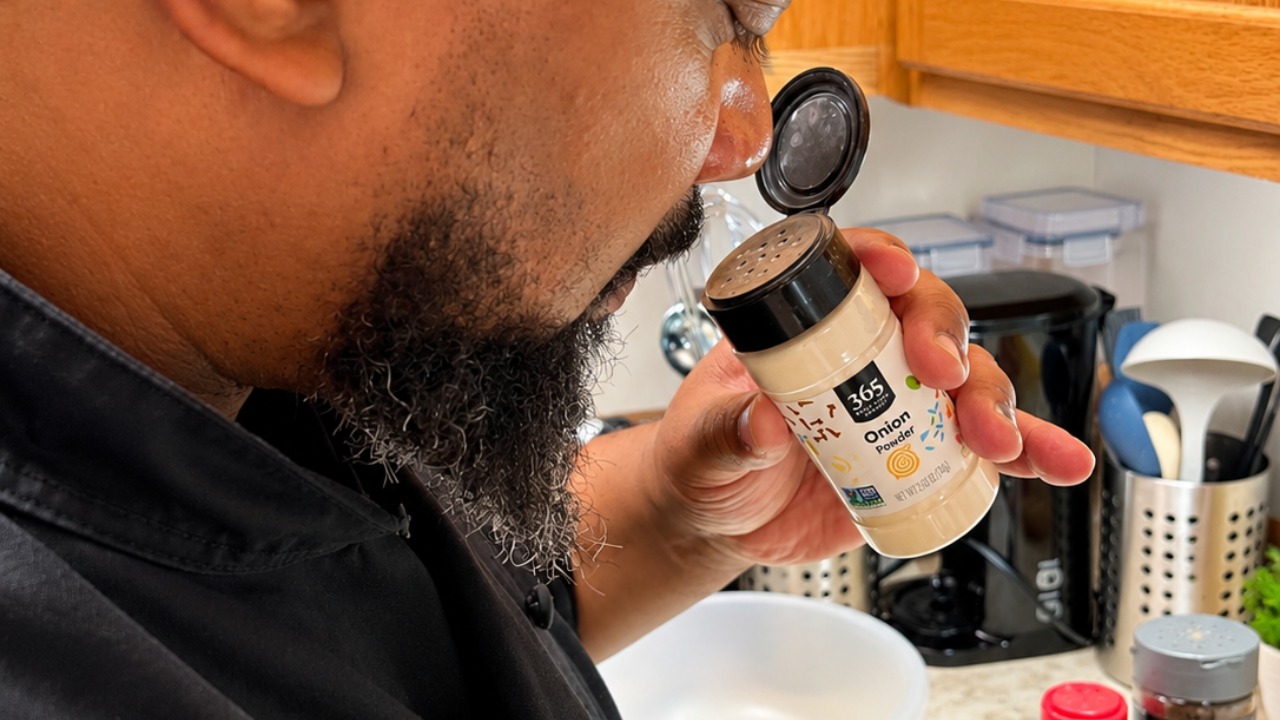
Discover how sound, aroma, touch, temperature, timing, and environment can help anyone become a more confident cook.
How do blind and visually impaired people cook?
Blind and visually impaired people cook by gathering reliable information through hearing, touch, smell, temperature, texture, resistance, and timing. They may also use organized kitchens, accessible technology, labels, and adaptive tools. Sight can be useful, but it is not the only route to cooking knowledge or sound kitchen decisions.
That is the essential answer.
Maybe you're here because you want to cook with greater confidence and independence — but the recipes, cooking videos, demonstrations, and kitchen instructions you've found depend heavily on visual information. If a step says "cook until golden brown" or "look for the color change," it can feel like the instructions were written for someone else. That frustration is real, and it's exactly why Unseen Cuisine® exists.
Cooking requires information, not sight alone.
A cook needs to know what is happening in the pan, how an ingredient is changing, whether equipment is set correctly, and when a decision needs to be made. Vision is one way to receive that information. It is not the only way
When you cook with vision loss, you can gather information through your other senses, accessible tools, consistent organization, and learned kitchen skills. When you cook without looking, you are not cooking without feedback. You are learning to recognize feedback through a broader sensory language.
What this means for you: the more reliable information you can gather from sound, touch, aroma, temperature, and timing, the less uncertainty you have to carry in the kitchen
What makes accessible cooking possible
Accessible cooking begins with reliable information.
A talking scale can announce a measurement. Tactile markings can help you identify a control. An accessible thermometer can provide temperature information aloud. A voice assistant can read a recipe, set a reminder, or help you manage several tasks
These tools can be useful. They can reduce friction and make information easier to access.
But a gadget does not teach you how to cook.
Equipment can tell you a number, identify a setting, or support a task. It cannot replace culinary judgment, sensory awareness, kitchen organization, or practice. You still need to understand what the information means and how it connects to the food in front of you.
That is why Unseen Cuisine® focuses on sensory-first culinary education rather than presenting a list of gadgets for blind cooks. The larger question is not simply, “What tool can replace sight?”
Ask a better question:
How can you receive and interpret reliable cooking information
You can receive that information from:
-
The sound of food and cookware
-
The aroma of ingredients as they change
-
The texture of food and dough
-
The temperature of a pan, liquid, or finished dish
-
The resistance of a spoon, whisk, or utensil
-
The timing and rhythm of a cooking process
-
The arrangement of your kitchen and equipment
-
Accessible labels, recipes, technology, and assistance
This approach supports blind and low-vision cooking, but it also helps sighted beginners and experienced cooks become more attentive. Designed with accessibility at its core. Built for everyone.
What this means for you: the right information reduces guesswork, helps you make more informed cooking decisions, and gives you more control over what you cook and eat.
How does sensory cooking replace visual information?
Sensory cooking does not mean guessing. It means learning to gather information from more than one source.
Use sound as information
Cooking has a rhythm. Food, pans, burners, timers, and utensils all create sound. Those sounds can communicate that a process is active, changing, slowing, or complete.
Cooking by sound helps you remain connected to the food instead of relying only on a screen or timer. A timer can tell you how much time has passed. It cannot always tell you what is happening in the pan.
What this means for you: when you learn to notice rhythm, sizzle, and silence, you make decisions with more confidence and less guessing.
Use aroma to understand transition
Aroma changes as ingredients heat, combine, soften, toast, or develop deeper flavor. These changes can help you understand movement in the cooking process.
Aroma is not a replacement for food safety tools or culinary training. It is another stream of information: one that connects you directly to the ingredients.
What this means for you: aroma changes can help you catch key transitions earlier, so you stay more in control of the cooking process.
Use touch and texture as feedback
Texture gives you physical information. Dough can move from loose to cohesive. A sauce can shift from thin to thick. An ingredient can change in resistance as it cooks.
You do not need to memorize every possible texture. With practice, you build familiarity with how food feels at different stages. That tactile feedback supports better decisions and stronger kitchen intuition.
What this means for you: tactile feedback gives you practical evidence, which makes cooking feel less abstract and more manageable.
Use temperature and timing together
Thermal awareness helps you understand the relationship between heat and food. Accessible thermometers can provide objective information, while timing helps you create consistency.
Neither tool needs to stand alone. Strong cooking decisions often come from combining temperature, timing, texture, aroma, and sound.
What this means for you: when you combine sensory cues instead of relying on one signal alone, your decisions become steadier and more informed.
Can blind people cook independently?
Yes. Blind and low-vision cooks can build independent cooking skills through training, consistent systems, accessible information, and practice.
Independence does not mean doing everything without support. It means having meaningful control over your decisions and knowing which forms of support help you work effectively.
You may use:
-
A talking scale or accessible recipe
-
Tactile or Braille labels
-
A voice assistant or screen reader
-
Assistance with shopping or identifying packaging
-
Vision rehabilitation services
-
A family member, friend, or professional coach
-
Kitchen tools adapted to your specific needs
Using assistance does not cancel independence. Information is information, whether it comes from your hands, ears, a device, a label, or another person.
Organization also matters. When tools, ingredients, and equipment have consistent locations, you spend less energy searching and more energy cooking. A stable kitchen environment supports memory, movement, safety, and confidence.
That is the thinking behind The Culinary Cockpit™: a structured kitchen environment designed to support control, awareness, and confident decision-making. The complete teaching system belongs inside Unseen Cuisine’s paid education, not in a public article like this one.
What this means for you: consistent systems support independent cooking skills by helping you work with less stress, less searching, and more confidence.
How do blind people know when food is cooking or done?
Blind cooks use a combination of sensory information, timing, experience, recipes, and accessible equipment to understand when food is cooking or finished.
There is no single method that works for every dish or every cook. A blind and low-vision cook may use:
-
Changes in sound
-
Aroma transitions
-
Texture and resistance
-
Thermal information
-
A talking thermometer
-
An audible or tactile timer
-
Recipe timing as one reference point
-
Personal knowledge of a familiar ingredient or technique
The important distinction is this: doneness is a decision supported by evidence.
A timer can support the decision, but it should not be the only source of information. Cooking conditions vary. Ingredients vary. Pan size, heat level, quantity, and starting temperature can all affect the result.
Sensory awareness helps you understand what the food is communicating in real time. Sensory cues give you real-time information about what is happening in the pan. That is the practical philosophy behind Unseen Cuisine: listen, notice, and gather enough information to make an informed choice.
What this means for you: the more evidence you can gather while food cooks, the more confidently you can decide when to stir, lower the heat, or stop cooking.
How do visually impaired people use kitchen equipment safely?
Safety begins with preparation and consistency: not fear.
A well-organized kitchen gives you a reliable environment for movement and decision-making. Keep frequently used tools in predictable locations. Reduce unnecessary clutter. Use tactile markings or accessible controls where appropriate. Maintain clear pathways around work surfaces and appliances.
A few important safety considerations include:
-
Place hot cookware only where you already know it can safely rest.
-
Use appropriate heat protection for hot pans, oven racks, and cookware.
-
Keep handles and cords positioned to reduce accidental contact.
-
Use stable cutting boards and non-slip mats when needed.
-
Learn the controls of each appliance before using it during active cooking.
-
Make sure smoke and carbon monoxide alerts are accessible to you.
-
Choose equipment based on your skills, kitchen, and comfort: not on assumptions about blindness.
Training matters. A vision rehabilitation professional, occupational therapist, cooking educator, or experienced coach can help you evaluate your kitchen and identify practical adaptations.
Accessible cooking is personal. What supports one cook may not support another.
What this means for you: safety systems are not about limitation — they help you move with more control and trust yourself more fully in the kitchen.
What kitchen tools can help blind and low-vision cooks?
Accessible kitchen tools can make information easier to receive and use. Choose tools because they solve a specific problem: not because they are marketed as universal solutions.
Useful options may include:
-
Talking kitchen scales for weight measurements
-
Tactile, Braille, or large-print labels
-
Accessible thermometers with audible output
-
Tactile markers for selected appliance controls
-
Liquid-level indicators for pouring
-
Non-slip mats and stable cutting boards
-
High-contrast equipment for cooks with usable vision
-
Voice assistants and screen-reader-friendly recipes
-
Accessible timers and reminders
-
Food processors or other tools that reduce repetitive preparation
The right tool should increase control. It should not create another layer of confusion.
What this means for you: the best tools reduce friction, support better decisions, and make everyday cooking feel more workable.

How do blind people measure ingredients?
Blind and low-vision cooks measure ingredients through tactile, auditory, and consistent systems.
Depending on the recipe and the cook’s preferences, measurement may involve:
-
Talking scales
-
Tactile or Braille measuring cups and spoons
-
Large-print measurements
-
Talking measuring jugs
-
Standard measuring tools used with tactile identification
-
Premeasured ingredients
-
Accessible digital recipes read through a screen reader
Measuring is not only about the tool. It is also about creating a repeatable process that makes quantities clear and reduces uncertainty.
Some cooks prefer weight measurements. Others prefer cups and spoons. Some use a combination. The best approach is the one that gives you reliable information and fits the way you work.
What this means for you: repeatable measuring systems help reduce uncertainty and make it easier to cook with consistency.
Can someone learn to cook after losing their vision?
Yes. You can learn to cook after losing vision, although you may need to build new relationships with familiar tasks.
A change in vision can require you to reconsider how you organize ingredients, use appliances, move around the kitchen, and evaluate food. That process is skill development: not proof that you cannot cook.
With appropriate training, you can develop:
-
Safer kitchen movement
-
Stronger sensory awareness
-
More consistent preparation habits
-
Greater comfort with accessible tools
-
Better understanding of texture, aroma, sound, and heat
-
More confidence making decisions without visual confirmation
It is normal for confidence to develop gradually. Familiarity comes from repetition. Mistakes provide information about what needs to change in your environment, equipment, or process.
Chef Riq understands this work personally. Known as The Blind Holistic Chef, he is the founder of Unseen Cuisine®, a professionally trained holistic chef, Certified Health Coach, Certified Fitness Nutrition Coach, and Board Certified Holistic Nutrition Practitioner.
After losing his vision, Chef Riq had to relearn how to navigate the kitchen. His professional culinary training, nutrition background, and lived experience with vision loss became the foundation for a different approach to culinary education built around sound, touch, aroma, texture, temperature, rhythm, and awareness.
That approach became The Unseen Cuisine Method™.
What this means for you: it is possible to rebuild trust in your kitchen step by step and develop stronger control over how you cook.
Why does sensory cooking build kitchen confidence?
Confidence grows when your decisions have a dependable foundation.
When you rely only on visual instructions, a missing image, inaccessible screen, or unclear video can interrupt the learning process. Sensory cooking offers more than one way to understand what is happening.
It also encourages you to move beyond memorizing recipes. Learn the principles behind cooking. Build awareness of transitions. Develop consistent kitchen organization. Practice interpreting information from the food and the environment.
This is Cooking With Your Senses™.
It is not limited to blind cooking. Sensory education helps any cook become more present, more adaptable, and less dependent on timers, screens, or visual demonstrations. It supports mindful cooking because it brings your attention back to sound, aroma, texture, temperature, and rhythm.
What this means for you: sensory cooking helps you build kitchen confidence by giving you more than one way to understand what is happening.
To keep exploring, learn more about the Unseen Cuisine Method™, listen to the Unseen Cuisine podcast, or start with Chef Riq’s book, Cook With Your Senses™.

Continue building your cooking confidence
Ready to take back more control in your kitchen?
If inaccessible cooking instruction, uncertainty in the kitchen, or dependence on visual information has made cooking feel more difficult than it needs to be, you do not have to figure everything out at once.
Take Back Your Kitchen™: 5 Days to Greater Cooking Confidence gives you a free starting point for approaching your kitchen differently and beginning to build greater confidence, control, and independence. Over five days, you will begin examining what stands between you and the foods you want to prepare and discover a different way to think about cooking.
Give yourself permission to learn as you go. Gather reliable information. Trust grows through practice.
Cooking does not inherently require sight. It requires awareness, information, and the confidence to make a decision.
Further resources:
For additional information about accessible cooking and vision rehabilitation, consult:
Ready to Take Back Your Kitchen?
Build greater cooking confidence through sound, aroma, texture, and sensory awareness. Join Chef Riq's free five-day Take Back Your Kitchen™ experience and begin your journey toward greater independence in the kitchen.
Stay Connected With Unseen Cuisine®
Get sensory cooking tips, accessible kitchen techniques, recipes, podcast updates, and news from Chef Riq delivered to your inbox.
We respect your privacy. No spam, no selling your information. Unsubscribe anytime.