What Does "Cooking Without Looking" Actually Mean?
Oct 23, 2026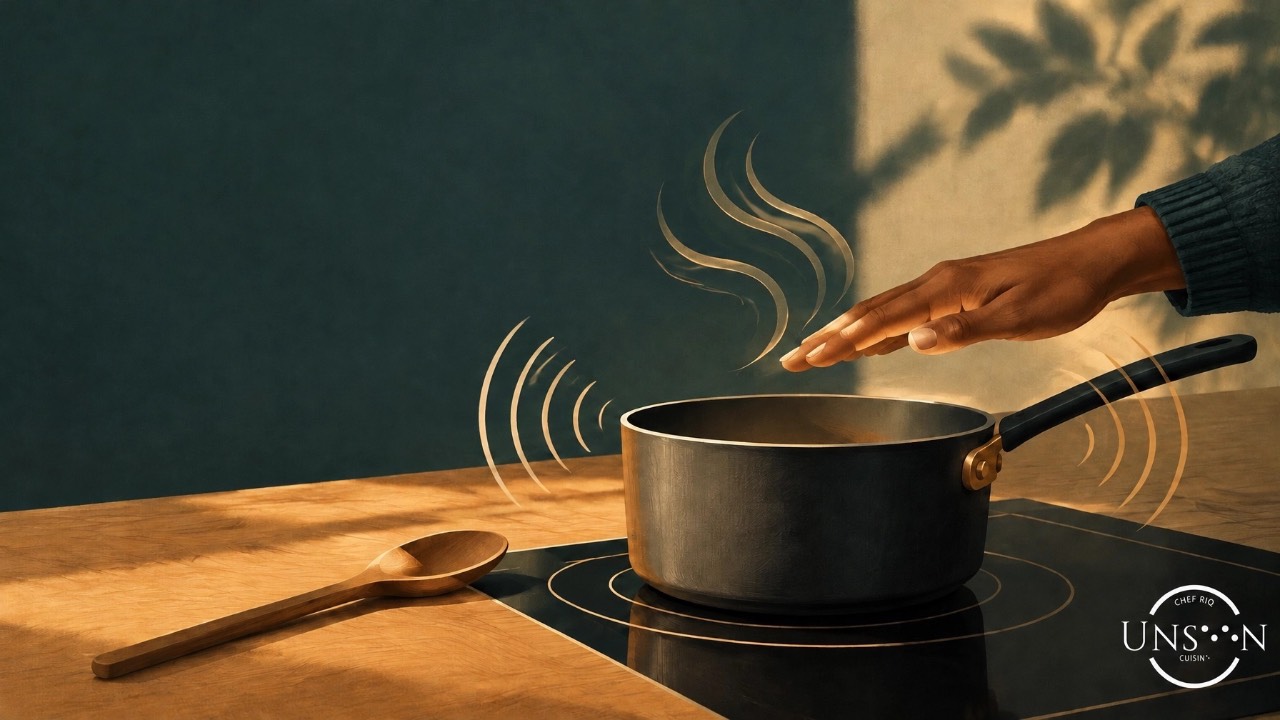
Learn how cooking without looking means using sound, aroma, touch, and temperature to build intuitive cooking skills, with or without sight.
If you rely on color, screens, or timers for every decision in the kitchen, it can be hard to know what to do when those cues aren’t available, or don’t tell the whole story. Cooking without looking offers another way to understand what’s happening: pay attention to the sensory information your food and tools provide.
Ready to build more trust in your kitchen? Explore the free Take Back Your Kitchen™ 5-day course.
Who Is Cooking Without Looking For?
Cooking without looking can mean preparing food without relying on sight. It can also describe a broader sensory approach: use sound, aroma, touch, temperature, and taste to stay connected to what’s happening as you cook.
That approach is useful whether you are a blind or low-vision cook building independent cooking skills, a beginner who wants clearer feedback, or an experienced home cook who wants stronger kitchen intuition. You don’t need to stop using visual cues if they work for you. Instead, add other forms of information so you have more than one way to make a decision.
Designed with accessibility at its core. Built for everyone. Sensory cooking treats accessibility as an advantage: when you learn to notice more, you gain more ways to respond.
The Problem: A Visual Cue Can’t Tell You Everything
A timer can tell you that a set amount of time has passed. It can’t tell you exactly how hot the pan is now, how quickly moisture is leaving, or whether an ingredient’s texture has changed.
Color can offer useful information, but it is only one cue. The same food may cook differently depending on its size, moisture, pan, and heat. If you depend on one signal alone, you may find yourself second-guessing your next move.
It’s normal to feel uncertain while learning to cook in a new way. Treat that uncertainty as a prompt to gather more information, not as proof that you lack skill.

What Does “Cooking Without Looking” Mean in Practice?
It means paying attention to sensory feedback instead of treating the visual display as the only source of information. The goal isn’t to guess. It’s to notice changes and use them to guide your judgment.
- Sound gives timing information. The sound of the pan changes as moisture changes. Sound can vary with the food, cookware, and heat.
- Aroma signals transition. The smell of an ingredient can change as it cooks.
- Texture gives feedback. Dough, sauce, and other mixtures change in feel as they cook.
- Temperature adds context. Notice warmth from a safe distance, use appropriate tools, and avoid touching hot cookware or food to test heat.
Together, these sensations help you understand the cooking process. They don’t all provide the same information, and no single cue is perfect. The useful skill is learning to pay attention and combine cues with experience.

Why Sensory Cooking Builds Kitchen Confidence
Sensory cooking helps you move from following instructions mechanically to understanding what is changing around you. That’s valuable when you need to adjust for a different pan, a new ingredient, or a heat level that behaves differently than expected.
It can also bring more presence to a meal. Those sensory details bring your attention back to the food and give you practical feedback in the moment.
For blind and low-vision cooks, sensory information can support independence. For sighted cooks, it can strengthen intuitive cooking and reduce dependence on screens. Both benefit from the same principle: build awareness that travels with you from one kitchen and meal to another.
Unseen Cuisine teaches sensory culinary education through sound, aroma, touch, and awareness. Chef Riq, The Blind Chef and founder of Unseen Cuisine™, is a professionally trained chef with decades of culinary and holistic nutrition experience. He relearned to cook while blind, and his experience informs The Unseen Cuisine Method™, which supports greater kitchen confidence through sensory awareness.
The Culinary Cockpit™ reflects our structured, sensory-based approach to culinary education. It is built around preparation, kitchen safety, sensory awareness, confidence, and independence: an organized way of learning to cook that prepares you before you begin, keeps you safe while you work, and helps you build lasting confidence and independence in the kitchen.

How to Begin Without Turning Cooking Into a Test
Start by noticing one extra cue during a meal you already know how to make. Keep your attention on the food, and let familiar instructions support you while you build sensory awareness.
For example, notice whether the sound of the pan is steady or changing, how the aroma develops, and how the mixture feels against the spoon. You are gathering information, not trying to prove that you can cook without any tools or guidance.
Use accessible tools and established safety practices that fit your kitchen and needs. A timer can help manage time; it doesn’t replace your senses. For food safety, use a food thermometer when appropriate and follow trusted guidance for safe temperatures. Sound, aroma, and touch are helpful feedback, but they cannot reliably confirm that every food has reached a safe temperature.
With practice, you may find that noticing one cue helps you notice another. Keep the process manageable. Confidence grows through attention, repetition, and small decisions.
When Does Cooking Without Looking Help?
Use sensory awareness whenever a recipe or situation asks you to respond to change, not just follow a clock. It can help when you’re learning a new technique, cooking with unfamiliar cookware, or trying to understand why a familiar dish behaves differently today.
It’s also useful when you want to make cooking more mindful. A calmer pace can help you notice what’s happening rather than rushing through each step. And if you’re blind or have low vision, developing reliable ways to receive information in the kitchen can support independent cooking skills.
You don’t have to abandon recipes, timers, or visual information. Add sensory feedback to your approach and let it deepen your understanding.
A related audio example is Unseen Cuisine podcast episode 24, “Fresh Linguine with Chicken Piccata | How to Cook Fresh Pasta by Sound & Touch”, which explores sound and touch in a fresh-pasta cooking context. For a broader introduction, Cooking Without Limits: Why Sensory Cooking Is Changing the Way We Learn to Cook discusses how sensory cooking can support confidence beyond visual cues.
What You Gain: More Than a Way to Cook Without Sight
Cooking without looking isn’t about ignoring sight or relying on instinct alone. It means making space for more kinds of feedback: sound, aroma, texture, and temperature each tell you something different about what is happening.
That broader awareness supports intuitive cooking, accessible cooking for everyone, and kitchen confidence that isn’t tied to a single recipe. You can use it at your own pace, with the tools and supports that work for you. A missed cue is information; the next meal gives you another chance to learn.
Take the Next Step
If you want a practical place to begin, join the free Take Back Your Kitchen™ 5-day course. Give yourself room to learn as you go. Build awareness one meal at a time, and let sound, aroma, touch, and intuition become part of how you cook.
Ready to Take Back Your Kitchen?
Build greater cooking confidence through sound, aroma, texture, and sensory awareness. Join Chef Riq's free five-day Take Back Your Kitchen™ experience and begin your journey toward greater independence in the kitchen.
Stay Connected With Unseen Cuisine®
Get sensory cooking tips, accessible kitchen techniques, recipes, podcast updates, and news from Chef Riq delivered to your inbox.
We respect your privacy. No spam, no selling your information. Unsubscribe anytime.